
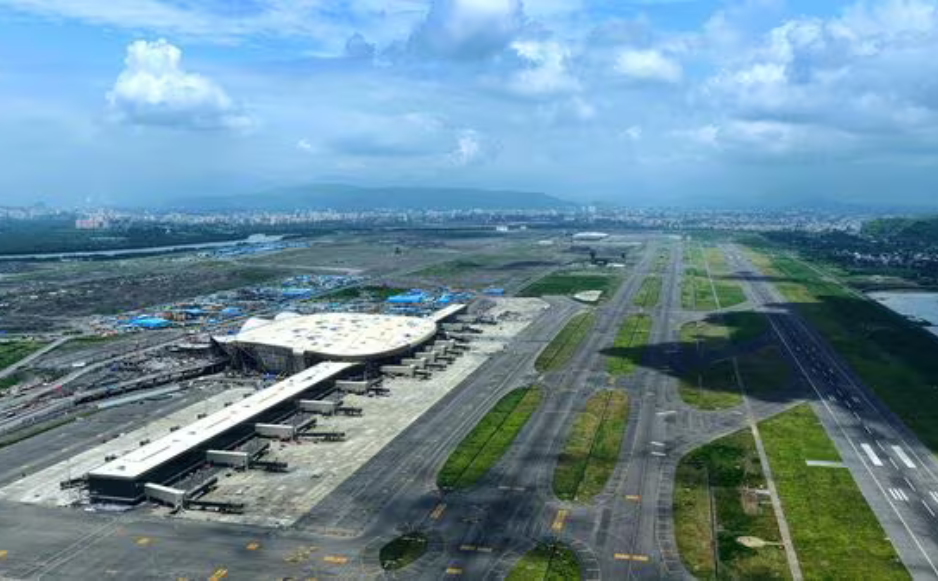
The skyline of the Mumbai Metropolitan Region (MMR) has officially changed. With the commercial launch of the Loknete D.B. Patil Navi Mumbai International Airport (NMIA) on December 25, 2025, India has entered a new era of aviation. This ₹19,650 crore mega-project is not just an airport; it is a massive economic engine set to redefine connectivity, property values, and the very way we travel.
A New Gateway to the World
Named after the legendary leader Loknete D.B. Patil, this greenfield airport addresses the long-standing congestion at Mumbai’s Chhatrapati Shivaji Maharaj International Airport (CSMIA). In its initial phase, NMIA is equipped to handle 20 million passengers annually, with a long-term vision to scale up to 90 million.
The airport’s architecture is a stunning blend of modernity and heritage, featuring “Lotus” motifs and lattice screens inspired by traditional Indian jaali designs. Beyond aesthetics, it is one of India’s most sustainable hubs, utilizing solar energy and rainwater harvesting to achieve LEED Gold standards.
The “Airport Effect” on Real Estate
For those looking at buying a home or commercial space, the “Airport Effect” is in full swing. Historically, areas around major airports like those in Delhi and Bengaluru have seen exponential growth, and Navi Mumbai is following the same trajectory.
- Property Appreciation: Locations like Ulwe, Panvel, and Dronagiri have already seen property prices surge by 30% to 50%.
- The Aerocity Advantage: A 667-acre Aerocity is under development, creating a business district filled with Grade-A offices, luxury hotels, and global retail brands.
- Rental Yields: With an estimated 2.5 lakh jobs being created, the demand for rental housing is skyrocketing, offering investors a sense of long-term trust and steady returns.
Connectivity: The Multimodal Revolution
What makes NMIA a true game-changer is its integration with other infrastructure marvels:
- Atal Setu (MTHL): Connects South Mumbai to the airport in under 30 minutes.
- Navi Mumbai Metro: Seamlessly links the airport to Belapur, Kharghar, and Taloja.
- Targhar Railway Station: The first Indian airport to feature a dedicated suburban rail link for daily commuters.
Key Trends & Search Terms for Investors
If you are tracking the real estate market, keep an eye on these trending themes for 2026:
- Smart Luxury: Demand for 2BHK and 3BHK “Compact Luxury” homes in Kharghar.
- Ready-to-Move-In (RTMI): High buyer preference for immediate possession to capitalize on the airport’s operational status.
- Logistics Hubs: Massive growth in warehousing near Kalamboli and Taloja due to the airport’s 1-million-tonne cargo capacity.
Conclusion
The Loknete D.B. Patil Navi Mumbai International Airport is more than just a transit point—it is the heart of a new “Twin City.” Whether you are an international traveler or a local investor, the opportunities here are taking off. Now is the time to build your future in the most promising corridor of India.